

Introduction
Ever wondered why some cabbage plants thrive effortlessly while others struggle with pests and poor growth? The secret often lies in cabbage companion plants—the natural allies that can transform your garden from average to abundant.
Companion planting isn’t just an old gardening trick; it’s a time-tested method rooted in ecology and plant relationships. By choosing the right neighbors for your cabbage, you can boost growth, improve flavor, and even keep harmful insects away without chemicals.
Whether you’re a beginner gardener or someone looking to refine your planting strategy, understanding how cabbage interacts with nearby plants can make all the difference. Let’s explore how to create a thriving, balanced garden ecosystem that supports your cabbage every step of the way.
What Are Cabbage Companion Plants?
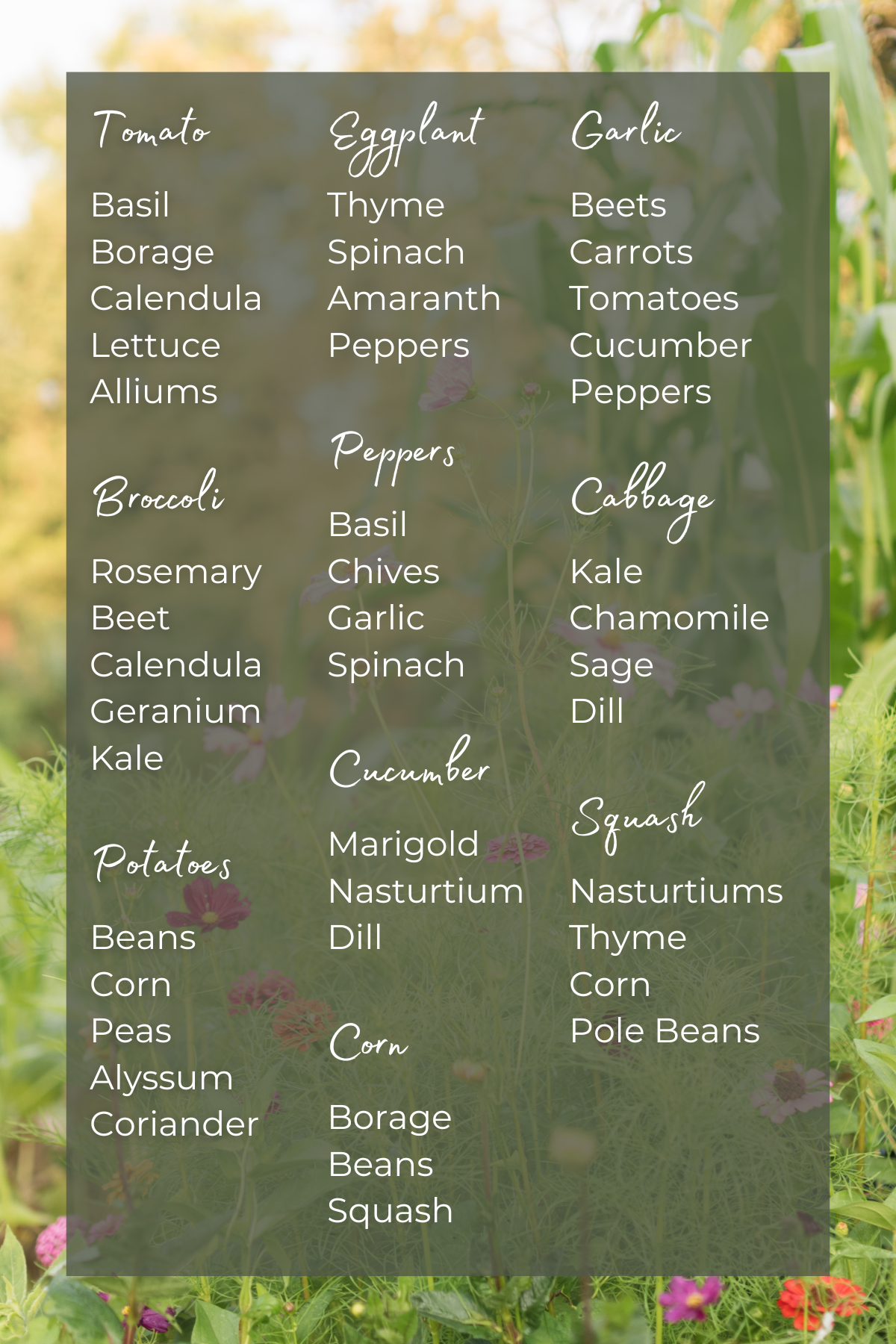
Companion plants are those that grow well together because they offer mutual benefits. In the case of cabbage, certain plants can:
- Repel pests like cabbage worms and aphids
- Improve soil health
- Enhance flavor and growth
- Provide shade or ground cover
Cabbage companion plants work by either attracting beneficial insects or confusing pests that rely on scent to find their host plants.
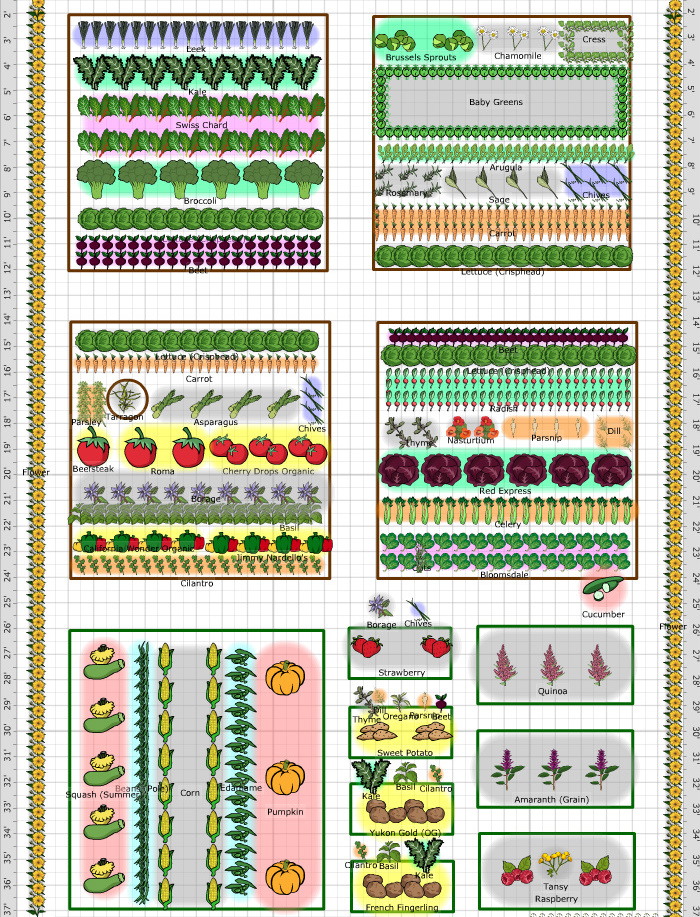


These relationships mimic natural ecosystems, where diversity strengthens resilience. Instead of relying on synthetic fertilizers or pesticides, companion planting allows nature to do the heavy lifting.
Best Cabbage Companion Plants for a Thriving Garden
Choosing the right companions is key to success. Here are some of the most effective plants to grow alongside cabbage.
Aromatic Herbs That Repel Pests
Herbs are among the most powerful cabbage companions because of their strong scents.
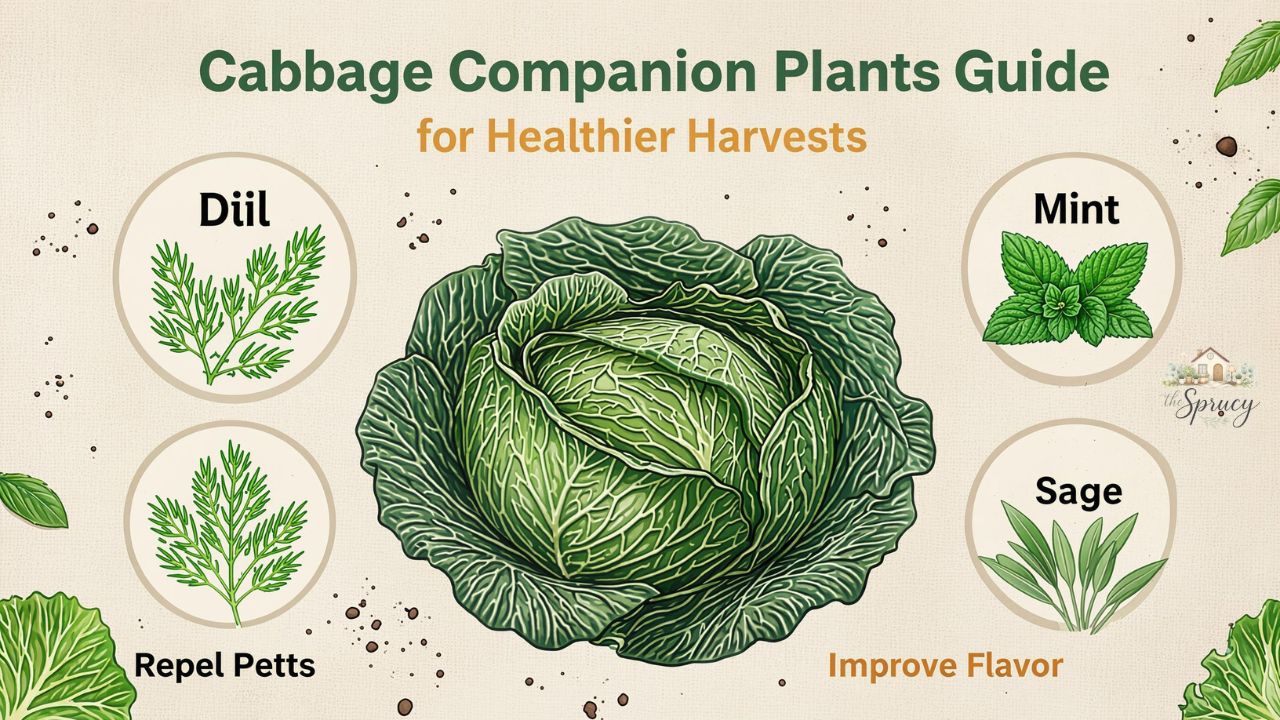
- Dill: Attracts beneficial insects like ladybugs and parasitic wasps
- Mint: Repels cabbage moths (plant in containers to prevent spreading)
- Sage: Deters cabbage butterflies
- Thyme: Helps keep worms and pests away
These herbs act as natural pest control, reducing the need for chemical sprays.
Leafy Greens That Share Space Well
Some plants grow harmoniously with cabbage without competing for nutrients.
- Lettuce
- Spinach
- Swiss chard
These shallow-rooted greens make efficient use of space while allowing cabbage roots to develop deeper.

This combination is perfect for small gardens or raised beds where maximizing space is essential.
Root Vegetables That Improve Soil Structure
Root crops can complement cabbage by loosening soil and improving drainage.
- Beets
- Onions
- Garlic
Garlic and onions also help repel aphids and other harmful insects, making them excellent cabbage companion plants.
Flowers That Attract Beneficial Insects
Flowers aren’t just decorative—they’re functional too.
- Marigolds
- Nasturtiums
- Calendula
These plants attract pollinators and predatory insects that feed on cabbage pests. Nasturtiums, in particular, act as trap crops, drawing pests away from your cabbage.
Cabbage Companion Plants That Boost Growth Naturally

Some companions go beyond pest control and actively enhance cabbage growth.
Nitrogen-Fixing Plants
Legumes improve soil fertility by adding nitrogen.
- Beans
- Peas
Nitrogen is essential for leafy crops like cabbage, helping them develop lush, green leaves.
Shade Providers
Cabbage prefers cooler temperatures, especially in warmer climates.
- Corn
- Sunflowers
These taller plants provide partial shade, reducing heat stress and preventing bolting.
Soil Enhancers
Certain plants improve soil conditions over time.
- Chamomile
- Borage
They enhance microbial activity, which leads to healthier cabbage plants.


Plants to Avoid Near Cabbage
Not all plants are good neighbors. Some can hinder cabbage growth or attract unwanted pests.
Poor Companion Plants
Avoid planting cabbage near:
- Tomatoes: Compete for nutrients
- Strawberries: Can stunt cabbage growth
- Pole beans: Interfere with development
Why These Combinations Fail
These plants either:
- Compete aggressively for nutrients
- Attract pests harmful to cabbage
- Disrupt root systems
Understanding what not to plant is just as important as knowing the best cabbage companion plants.
How to Plan Your Garden Using Cabbage Companion Plants

Designing your garden with intention can significantly improve results.
Step-by-Step Companion Planting Plan
- Map your garden space
- Group compatible plants together
- Place taller plants strategically for shade
- Add herbs and flowers around cabbage rows
- Rotate crops each season
Spacing Tips
- Keep enough distance between plants to prevent overcrowding
- Allow airflow to reduce disease risk
- Use raised beds for better control
A well-planned layout ensures each plant benefits from its neighbors without competing for resources.
Seasonal Companion Planting Strategies
Timing plays a crucial role in companion planting success.
Spring Planting
- Pair cabbage with lettuce and peas
- Focus on fast-growing companions
Summer Planting
- Add shade providers like corn
- Use herbs to repel increased pest activity
Fall Planting
- Combine cabbage with garlic and onions
- Prepare soil for winter crops
By adjusting your companions with the seasons, you maintain a healthy and productive garden year-round.
Common Mistakes to Avoid
Even experienced gardeners can make errors when using cabbage companion plants.
Overcrowding
Planting too many companions can lead to competition rather than cooperation.
Ignoring Soil Health
Companion planting works best in nutrient-rich soil. Always amend your soil before planting.
Lack of Crop Rotation
Planting cabbage in the same spot each year increases disease risk.
Choosing Invasive Plants
Some companions, like mint, can take over your garden if not controlled.
Avoiding these mistakes ensures your companion planting efforts deliver the best results.
Benefits of Using Cabbage Companion Plants
The advantages go beyond just healthier cabbage.
Natural Pest Control
Reduces reliance on pesticides by using plant relationships.
Improved Yields
Healthier plants produce larger, better-quality harvests.
Enhanced Biodiversity
A diverse garden is more resilient to pests and diseases.
Better Soil Health
Companion plants contribute to long-term soil fertility.
When used effectively, cabbage companion plants create a balanced ecosystem that supports sustainable gardening.
FAQ
Frequently Asked Questions
What are the best cabbage companion plants for beginners?
Herbs like dill and thyme, along with lettuce and onions, are easy and effective choices for beginners.
Can I plant cabbage with tomatoes?
It’s not recommended, as tomatoes compete for nutrients and can hinder cabbage growth.
How do cabbage companion plants help with pests?
They either repel pests with strong scents or attract beneficial insects that prey on harmful bugs.
Do flowers really help cabbage grow?
Yes, flowers like marigolds and nasturtiums attract helpful insects and can act as trap crops.
Can I grow cabbage with carrots?
Yes, carrots are generally compatible and do not compete heavily with cabbage.
How close should companion plants be?
Spacing depends on the plant type, but ensure enough room for airflow and root development.
Are cabbage companion plants suitable for small gardens?
Absolutely. Companion planting is ideal for maximizing space in small or raised-bed gardens.
Do companion plants affect cabbage flavor?
Some gardeners believe herbs can subtly enhance flavor, though the main benefit is plant health.
How often should I rotate cabbage crops?
Rotate every season or at least every year to prevent soil-borne diseases.
Conclusion
Creating a thriving garden doesn’t require complicated techniques—just a thoughtful approach to plant relationships. By choosing the right cabbage companion plants, you can naturally improve growth, protect against pests, and enjoy a more productive harvest.
The beauty of companion planting lies in its simplicity. With a bit of planning and observation, you can turn your garden into a balanced ecosystem where every plant supports the other. And once you see the results, you’ll never look at planting the same way again.