

Introduction
Homework has long been considered a cornerstone of education—but what if it’s doing more harm than good? The idea behind homework seems logical: more practice equals better learning. Yet, more educators and parents are beginning to question whether this traditional approach still works in today’s world.
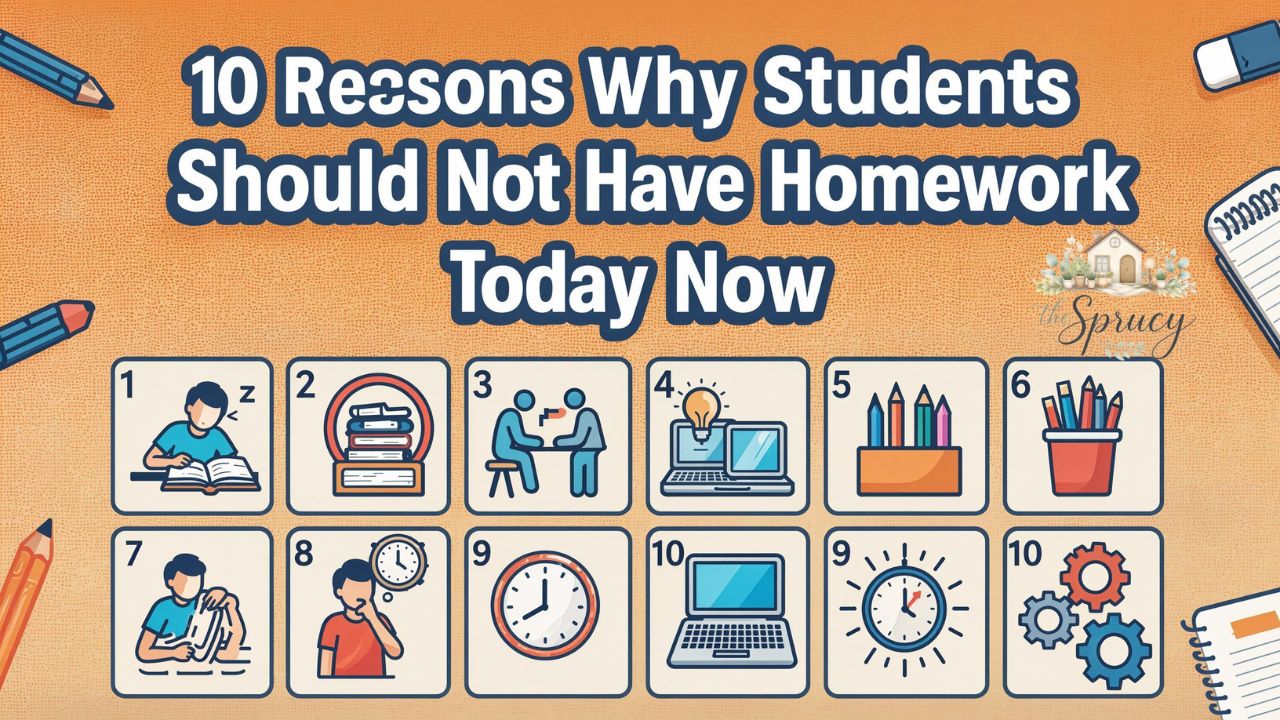
In fact, many experts now highlight 10 reasons why students should not have homework, pointing to its impact on mental health, creativity, and overall well-being. Students today face pressures far beyond the classroom, and piling on extra work at home may not be the solution we once believed it to be.
This topic matters because it directly affects millions of students worldwide. From sleep deprivation to burnout, homework has quietly become a source of stress rather than growth. Let’s take a closer look at why rethinking homework could lead to healthier, happier, and more successful learners.
The Changing Role of Homework in Modern Education
Education has evolved dramatically over the years. With digital tools, interactive classrooms, and personalized learning, the traditional concept of homework is being challenged more than ever.
Many educators argue that learning should primarily happen in school, where teachers can guide, support, and clarify concepts in real time. When students leave school, their time should ideally be spent recharging, exploring interests, and developing life skills.

Research increasingly supports the idea that excessive homework offers diminishing returns. Instead of improving academic performance, it often leads to frustration, disengagement, and even resentment toward learning.
10 Reasons Why Students Should Not Have Homework
1. Homework Increases Stress and Anxiety
One of the most compelling points among the 10 reasons why students should not have homework is its impact on mental health. Students often juggle multiple subjects, extracurricular activities, and social expectations.
Adding hours of homework each day can lead to chronic stress, anxiety, and burnout—especially in younger students who are still developing emotional resilience.
2. It Reduces Time for Family and Social Interaction
After a full day at school, students need time to connect with family and friends. Homework often cuts into these valuable moments.
Strong relationships play a critical role in emotional development, and limiting this time can negatively affect a child’s overall well-being.


3. Homework Limits Creativity
Creativity thrives when children have unstructured time. Homework, however, tends to focus on rigid tasks and repetition.
Without free time to explore hobbies like art, music, or imaginative play, students miss opportunities to develop critical creative skills.
4. It Can Lead to Sleep Deprivation
Sleep is essential for cognitive function, memory, and overall health. Yet, many students stay up late completing assignments.
Among the 10 reasons why students should not have homework, sleep deprivation stands out as one of the most damaging consequences.
5. Homework Doesn’t Always Improve Learning
Contrary to popular belief, more homework doesn’t always mean better understanding.
Studies show that beyond a certain point, additional homework provides little to no academic benefit—especially for younger students.
6. It Creates Inequality Among Students
Not all students have the same home environment. Some may have access to quiet study spaces, internet, and parental support, while others do not.
This inequality can widen achievement gaps, making homework unfair rather than helpful.
7. Homework Encourages Burnout
Constant academic pressure without adequate rest leads to burnout. Students may lose motivation and interest in learning altogether.
This is one of the key insights when discussing 10 reasons why students should not have homework in modern education systems.
8. It Reduces Physical Activity
Time spent on homework often replaces time that could be used for sports or outdoor play.
Physical activity is crucial for both physical health and mental well-being, and homework can unintentionally limit this.
9. Homework Can Strain Parent-Child Relationships
Homework often becomes a source of conflict at home. Parents may feel pressured to help, while children may resist or feel overwhelmed.
This tension can damage relationships instead of fostering a supportive learning environment.
10. It Leaves Little Time for Real-World Skills
Life skills—such as communication, problem-solving, and time management—are often developed outside of structured academic work.
By consuming so much time, homework limits opportunities for students to learn through real-life experiences.
Understanding the Bigger Picture
When discussing the 10 reasons why students should not have homework, it’s important to recognize that the issue isn’t about eliminating learning—it’s about improving it.
Education should inspire curiosity, not exhaustion. Students learn best when they are engaged, motivated, and mentally healthy.
Alternative Approaches to Homework
Project-Based Learning
Instead of repetitive assignments, project-based learning encourages deeper understanding through real-world applications.
In-Class Practice
Completing practice work in class allows teachers to provide immediate feedback and support.
Flexible Learning Time
Giving students control over their schedules can increase motivation and responsibility.
These alternatives align better with the arguments presented in the 10 reasons why students should not have homework.
FAQ
Frequently Asked Questions
Is homework completely useless?
Not entirely, but excessive or poorly designed homework can be ineffective. Quality matters more than quantity.
Do students learn better without homework?
In many cases, yes—especially when learning is supported through engaging classroom activities.
Why do schools still give homework?
Tradition and outdated beliefs about productivity continue to influence education systems.
Does homework help with discipline?
It can, but there are more effective ways to teach discipline, such as structured routines and goal-setting.
What age group is most affected by homework?
Younger students are often more negatively impacted because they need more play and rest time.
Can homework ever be beneficial?
Yes, when it is minimal, purposeful, and tailored to reinforce learning—not overwhelm students.
How does homework affect mental health?
It can increase stress, anxiety, and burnout, especially when workloads are excessive.
Are there countries without homework?
Some countries have reduced homework significantly and still maintain high academic performance.
Conclusion
The conversation around homework is shifting, and for good reason. The 10 reasons why students should not have homework highlight a growing awareness that traditional methods don’t always align with modern needs.
Students today require balance, creativity, and well-being just as much as academic success. By rethinking homework, educators and parents can create an environment where learning feels natural, engaging, and sustainable.
Ultimately, education should empower students—not exhaust them.